THE MESSAGE SENT BEFORE THE VERDICT
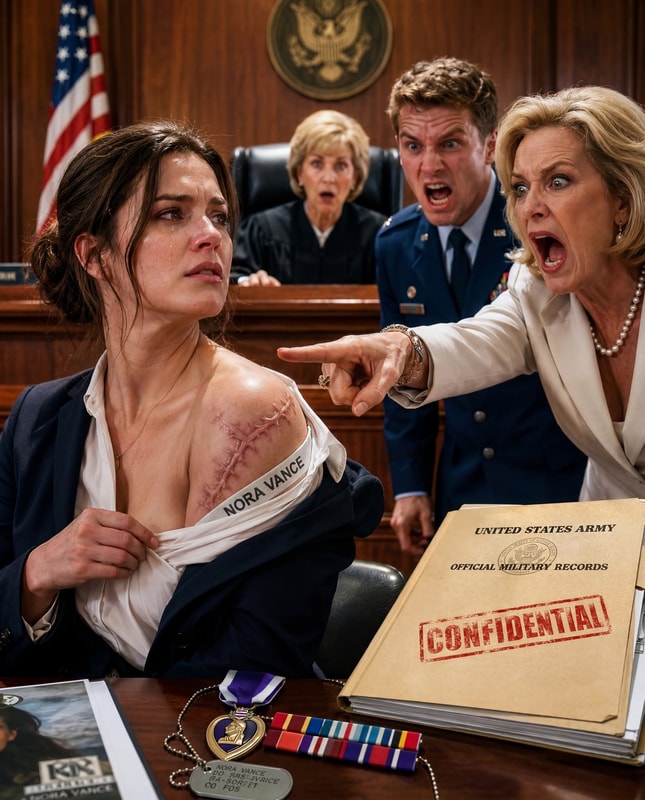
Charles Whitmore didn't enter the courtroom.
He remained in the hallway, standing beside a vending machine, pretending to read something on his phone.
But every time the courtroom door opened, his eyes moved toward me.
During the afternoon recess, Daniel asked me to remain near the security desk.
"I don't want you speaking to anyone connected with Westbridge."
"I wasn't planning to."
"Good."
He looked toward Whitmore.
"Especially him."
I folded my arms.
"Do you know why he's here?"
"Not yet."
Daniel walked toward the far end of the hallway to make a call.
I sat on a wooden bench beneath a large courthouse window.
The afternoon sunlight threw long shadows across the floor.
My shoulder throbbed.
I was exhausted.
Not physically.
I had endured worse pain than that.
But hearing my own mother describe me as a fraud had opened something inside me that I thought I'd buried years ago.
When I was sixteen, I had won a statewide academic scholarship.
My mother had told relatives that the school probably needed more female applicants.
When I enlisted, she said I was running away from responsibility.
When I received my first promotion, she asked why I couldn't find a normal job.
And when I came home wounded, she accused me of enjoying the attention.
Grandpa had always told me not to measure myself through her approval.
I had tried.
But some part of me remained that sixteen-year-old girl waiting for her mother to say she was proud.
A shadow fell across the bench.
I looked up.
Whitmore stood several feet away.
"Miss Vance."
His voice was smooth.
He looked to be in his late fifties.
His silver hair was neatly trimmed.
His suit probably cost more than my monthly mortgage payment.
"Mr. Whitmore."
"I'm sorry for your loss."
I stared at him.
"My grandfather died six months ago."
"Grief doesn't follow a schedule."
"Neither does harassment, apparently."
He smiled faintly.
"I can see Arthur's temper survived."
I stood.
"What do you want?"
"To avoid an unnecessary escalation."
"Then stop trying to acquire my property."
His expression didn't change.
"You misunderstand the situation."
"Do I?"
"Your grandfather's farm is tied to matters much larger than a family disagreement."
"Then explain them."
He glanced toward the security desk.
"Not here."
"I'm not going anywhere with you."
"That would be unwise."
I felt my muscles tighten.
"Is that a threat?"
"No."
He leaned slightly closer.
"It's an observation."
I stepped back.
"Stay away from me."
Whitmore looked at my injured shoulder.
Then he said something that froze my blood.
"I understand you were wounded near Kandahar."
I hadn't discussed the location of that incident publicly.
The official records contained deployment information, but the details of the operation weren't part of my mother's original filings.
"How do you know that?"
He smiled.
"Arthur told me things."
"Grandpa didn't trust you."
"Your grandfather trusted very few people."
I moved toward the security desk.
Whitmore lowered his voice.
"Ask your attorney about the second will."
I stopped.
"What second will?"
His smile disappeared.
"Exactly."
Then he walked away.
I watched him enter the elevator.
My hands were cold.
Daniel returned a moment later.
"What happened?"
I told him everything.
His expression darkened.
"Did he threaten you directly?"
"He said there was a second will."
Daniel looked toward the elevator.
"That's interesting."
"Why?"
"Because there is a later document mentioned in the estate records, but we haven't received an executed second will."
"What kind of document?"
"A codicil draft that was never finalized, as far as we know."
I stared at him.
"Why didn't you tell me?"
"Because it wasn't part of the current dispute until opposing counsel raised it."
"Did they?"
"Not formally."
I felt a headache beginning.
"Daniel, what exactly did Grandpa leave behind?"
He hesitated.
"More than we understood at the beginning."
Before I could respond, his phone rang.
He answered.
For several seconds, he listened without speaking.
Then he looked directly at me.
"Where?"
His expression sharpened.
"Is anyone hurt?"
My stomach dropped.
He ended the call.
"That was the county sheriff."
"What happened?"
"Someone entered the farmhouse."
Again.
I felt the air leave my lungs.
"Was anything stolen?"
"They don't know yet."
"Was anyone there?"
"The caretaker discovered the back door open."
I grabbed my bag.
"We need to go."
Daniel stopped me.
"The hearing resumes in twelve minutes."
"I don't care."
"Nora, listen to me."
I looked at him.
He lowered his voice.
"Whoever did this may want you to leave before we finish presenting the evidence."
I stared at him.
He was right.
The first break-in had occurred after the will was announced.
Now another had happened on the day our evidence began exposing Derek's financial dealings.
Someone was trying to recover something from the farmhouse.
Something they hadn't found the first time.
I sat back down.
"What do we do?"
"Finish the hearing."
"And the farm?"
"I'll ask the sheriff to secure it."
We returned to the courtroom.
Judge Sterling resumed proceedings.
Daniel introduced authenticated military documents establishing my service.
A retired Army colonel named James Whitaker testified remotely about having served as my commanding officer.
He described my duties as a combat medic.
He confirmed my deployment.
He identified the circumstances surrounding my injury within the limits of what he was authorized to discuss.
Then he looked into the camera and said something I will never forget.
"Sergeant Vance saved lives that day."
My throat tightened.
The colonel continued.
"She remained with the wounded despite suffering serious injuries herself."
Judge Sterling listened without interruption.
"Colonel, are you certain about the identity of the service member you're describing?"
"Absolutely, Your Honor."
"Did you personally know her?"
"Yes."
"For how long?"
"Several years."
"And did you personally observe her military service?"
"Yes."
The judge thanked him.
My mother's attorney declined extensive cross-examination.
There was little he could accomplish by challenging a witness supported by official records.
For the first time, my mother refused to look at me.
But Derek kept watching the documents.
His face had become pale and rigid.
Daniel then called a forensic document examiner.
She explained discrepancies between the genuine records and the copies attached to the petition.
The altered documents contained inconsistent formatting.
Some signatures appeared to have been digitally inserted.
Several dates did not match the issuing agency's records.
Judge Sterling asked whether the examiner could identify who had altered them.
"No, Your Honor."
"But can you identify alterations?"
"Within the scope of my examination, yes."
Daniel nodded.
"Thank you."
The examiner stepped down.
My mother's attorney requested additional time to review the findings.
Judge Sterling allowed limited questioning.
Then she announced that the court would consider appropriate sanctions and referrals if misconduct was established.
It wasn't a verdict.
It wasn't a declaration that my mother and brother were criminals.
But it was the first real crack in their carefully constructed story.
Derek leaned toward our mother.
I couldn't hear everything.
Only fragments.
"You promised..."
"...not supposed to have..."
"...Whitmore said..."
My mother grabbed his arm.
"Be quiet."
Daniel noticed.
So did I.
Then Judge Sterling turned toward us.
"Mr. Mercer, you indicated that you had one additional document relevant to the credibility of the petitioners' allegations."
"Yes, Your Honor."
"Please proceed."
Daniel stood.
He placed a sealed envelope on the clerk's desk.
"This was provided under instructions from Arthur Vance's estate attorney."
My heart started pounding.
I had seen that envelope before.
Grandpa had shown it to me during my final visit.
At the time, he had refused to explain its contents.
The envelope bore his signature across the sealed flap.
Judge Sterling examined the exterior.
Then she looked toward the attorneys.
"Have the parties received notice of this document?"
Daniel explained the notice and authentication arrangements.
After a brief procedural discussion, the judge authorized the envelope to be opened for examination.
My mother stared at it.
Derek whispered something that sounded like a prayer.
The clerk carefully cut the top.
Inside was a handwritten letter and a small storage device.
Daniel began reading the letter aloud.
"My name is Arthur Vance, and I am writing this because I believe members of my family are attempting to take property and money without my consent."
My mother gasped.
Daniel continued.
"I have reason to believe my daughter Evelyn and grandson Derek have been working with Charles Whitmore to obtain control of my farm."
Derek pushed back his chair.
"This is insane!"
Judge Sterling ordered him to remain seated.
Daniel read the final paragraph.
"If my granddaughter Nora is accused of dishonesty concerning her military service or my estate, I ask that the evidence I preserved be examined before anyone accepts those accusations."
Then he stopped.
His eyes moved down the page.
Judge Sterling noticed.
"Mr. Mercer?"
Daniel swallowed.
"Your Honor, there is one additional statement."
The courtroom became perfectly still.
Daniel read it slowly.
"I also believe that someone has been concealing the truth about the death of my wife, Margaret Vance."
My grandmother.
The woman I had been told died from a sudden heart attack twenty-two years earlier.
My mother let out a strangled sound.
Then she whispered something I had never heard her say before.
"Arthur, you promised you'd take that secret to your grave."