THE WOMAN WHO KNEW TOO MUCH
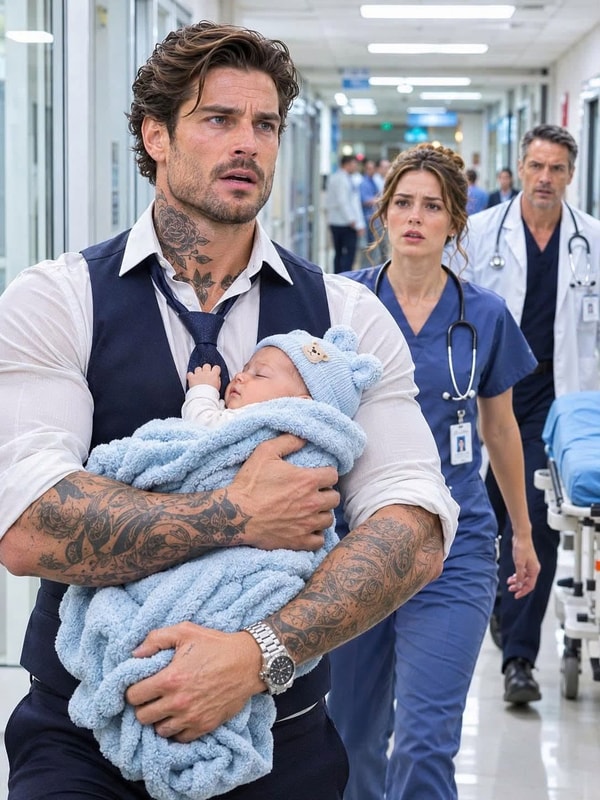
By midnight, the hospital had become the center of my universe.
The outside world continued without me.
My companies held meetings.
Investors sent messages.
Lawyers requested signatures.
News outlets speculated about why Russell Bannister had abruptly canceled a major business announcement.
I ignored everything.
Jonah lay in a private pediatric intensive care room, surrounded by specialists who monitored his breathing, heart rate, and neurological responses.
The doctors had managed to stabilize him.
But stabilization was not recovery.
Dr. Hart explained that he would need close observation because certain medications could produce effects that persisted or returned after initial treatment.
I nodded as though I understood.
In reality, I understood only one thing.
My son was alive, but he was not safe.
At 12:43 a.m., I found Tessa sitting alone near the hospital chapel.
She had refused the hotel room Marcus offered her.
Instead, she remained in a plastic chair with her handbag on her lap.
Her eyes were closed.
For a moment, I thought she was sleeping.
Then she spoke.
"Is he still stable?"
I stopped.
"Yes."
She opened her eyes.
"Good."
I sat beside her.
There was a long silence.
I had apologized to executives after failed negotiations.
I had apologized to investors when quarterly results disappointed them.
I knew how to construct the kind of statement that acknowledged a problem without surrendering authority.
But those apologies had always been business transactions.
This was different.
"Tessa."
She turned toward me.
"I was wrong."
She said nothing.
"I should have listened to you."
Still nothing.
"I humiliated you in my kitchen."
Her fingers tightened around her handbag.
"I've been humiliated before, Mr. Bannister."
The calmness of her voice made the words more painful.
"I know that doesn't excuse what I did."
"No."
I lowered my head.
"It doesn't."
She looked toward the chapel doors.
"Do you know what frightened me most when you fired me?"
I shook my head.
"It wasn't losing my job."
"What was it?"
"Leaving Jonah alone with someone I didn't trust."
I closed my eyes.
"I don't know how to make this right."
"You can't make it right by paying me."
I looked up.
She continued.
"You can start by protecting your son."
I nodded.
"Tell me everything you know about Doreen."
Tessa hesitated.
"I don't think you understand how dangerous this may be."
"Then help me understand."
She reached into her bag and removed a small notebook.
The cover was blue and badly worn.
"I started writing things down after my second week at the house."
I stared at it.
"Why?"
"Because certain things reminded me of what happened at Northbridge."
Dr. Hart had mentioned Northbridge Children's Medical Center earlier.
I knew the hospital.
Three years earlier, its neonatal research division had been the subject of a regulatory investigation involving medication records and patient safety complaints.
My charitable foundation had donated millions to that institution.
I remembered signing documents connected to the investigation.
I remembered being assured that the matter involved ordinary administrative mistakes.
And I remembered believing the people who gave me that explanation.
"What happened at Northbridge?" I asked.
Tessa opened her notebook.
"I was a pediatric nurse."
Her voice remained controlled.
"I loved my job."
She described working night shifts, comforting frightened parents, and staying late when understaffed units needed another experienced pair of hands.
Then she told me about the day she noticed discrepancies between medication administration records and the supplies being recorded as used.
She had reported the problem.
At first, her supervisor thanked her.
Then management accused her of failing to follow procedures.
Her complaints disappeared from the internal reporting system.
Witnesses changed their statements.
Within six months, she had lost her job.
Although she was never convicted of wrongdoing, the accusations damaged her professional standing.
Hospitals stopped returning her calls.
Her savings disappeared.
She took cleaning jobs to help support her younger brother.
"Why didn't you sue?" I asked.
"I tried."
"What happened?"
She looked at me.
"The hospital had better lawyers."
I felt something uncomfortable shift inside me.
My companies employed entire teams of attorneys whose primary responsibility was to win disputes.
I had rarely considered what those resources looked like from the other side.
Tessa turned another page.
"Then I saw Doreen."
"Where?"
"At your house."
"Obviously."
"No."
She shook her head.
"I recognized her."
"From Northbridge?"
Tessa nodded.
"She worked as a private clinical coordinator during the investigation."
My chest tightened.
"Doreen told me she had been a nanny for twenty years."
"That might be true."
Tessa looked down.
"But that wasn't the only work she did."
She described seeing Doreen carrying confidential files into administrative offices at Northbridge.
She remembered a series of private meetings held after the medication discrepancies were reported.
She remembered an older woman with carefully styled hair watching her from the end of a hallway.
"That woman was Doreen."
I stared at the notebook.
"Why didn't you tell me immediately?"
"I wasn't certain it was the same person."
"And later?"
She gave me a sad look.
"Later, I learned how you reacted when employees questioned people you trusted."
I couldn't argue.
At 1:26 a.m., Marcus called.
"Sir, we have a problem."
I stood.
"What happened?"
"Doreen never returned to the house."
"Have you called her?"
"Repeatedly."
"Her residence?"
"We sent someone."
"And?"
"It's empty."
I walked toward the window.
Outside, rain streaked the hospital glass.
"What do you mean empty?"
"There's no furniture, sir."
A cold sensation traveled through my chest.
"That's impossible."
"The apartment associated with her employment file appears to have been vacated weeks ago."
"Find the agency that placed her."
"We're trying."
"Trying?"
Marcus hesitated.
"The agency's listed office is closed."
I pressed a hand against the window.
"Keep looking."
I ended the call.
Tessa was watching me.
"Doreen's gone," I said.
Her face went pale.
"Then she'll know someone discovered the patch."
My phone vibrated again.
This time the caller was Martin Keene.
Martin had served as my chief of staff for nine years.
He knew my travel schedule, managed my confidential correspondence, and had been one of the few people I relied upon after Eleanor died.
I answered.
"Martin."
"Russell, I just heard about Jonah."
His voice sounded genuinely distressed.
"Why didn't you call me earlier?"
"I've been at the hospital."
"How is he?"
"Critical but stable."
"Thank God."
I heard him exhale.
Then he asked a question that seemed ordinary at the time.
"Have the doctors determined what happened?"
"They're investigating."
"Was anyone with him?"
I looked directly at Tessa.
"His housekeeper was."
A pause followed.
"That Moreno woman?"
"Yes."
Martin sighed.
"Russell, I warned the household supervisor about her."
My stomach tightened.
"Why?"
"She has a questionable employment history."
"What kind?"
"Problems at a hospital."
I kept my voice steady.
"What problems?"
"Allegations involving patient medication records."
Tessa watched my expression change.
Martin continued.
"We should be very careful about what she tells the authorities."
"Why?"
"Because people with damaged reputations sometimes manufacture situations to make themselves appear heroic."
I felt something inside me turn cold.
"Martin."
"Yes?"
"How did you know she was involved?"
Silence.
Then he laughed lightly.
"You just told me."
"No."
I stared at my reflection in the dark window.
"You said you warned the supervisor about her."
"Of course."
"Then why did you let her remain in my house?"
Another silence.
"Russell, you're exhausted."
"Answer the question."
"I thought you should know about the risk."
The conversation ended shortly afterward.
I stood motionless.
Tessa approached.
"What did he say?"
"That you couldn't be trusted."
She nodded slowly.
"That's familiar."
I showed her Martin's contact information.
"Have you ever seen this man before?"
She studied the photograph.
Her expression changed.
"Yes."
"Where?"
"At Northbridge."
I felt my pulse accelerate.
"Are you certain?"
"He attended meetings with the hospital administrator."
"When?"
"During the investigation."
I stared at the photograph of the man who had managed my life for nearly a decade.
Martin had never told me he knew anyone involved in the Northbridge scandal.
He had never mentioned Tessa.
And he had personally prevented her from reaching me that morning.
At 2:08 a.m., Marcus called again.
"Sir, I found something in your security system."
"What?"
"Someone deleted portions of today's nursery footage."
I tightened my grip on the phone.
"Can you recover it?"
"Possibly."
"Who accessed the system?"
Marcus hesitated.
"The deletion came from an administrator account."
"Whose?"
"Martin Keene's."
For several seconds, I couldn't speak.
The man who had helped me bury my wife had access to my son's nursery cameras.
The man who managed my personal security had removed footage from the day my child nearly died.
And the woman I had fired was the only person who had warned me.
I turned to Tessa.
"There's something I need you to tell me."
She waited.
"Did you ever meet my wife?"
Tessa's face changed so abruptly that I knew the answer before she spoke.
"Yes."
My heart began pounding.
"When?"
She lowered her eyes.
"Six months ago."
I stopped breathing.
Six months ago was the month Eleanor died.
"Where?"
Tessa whispered the answer.
"At Northbridge."
I stared at her.
"My wife wasn't being treated at Northbridge."
Tessa slowly shook her head.
"Mr. Bannister, there's something about Eleanor's final week that nobody has ever told you."